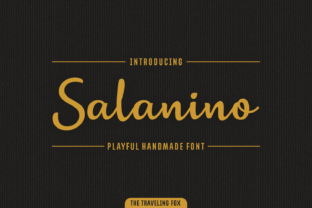
Salanino: A Playful Font That Adds Personality to Your Designs
In the world of typography, the right font can make all the difference. Whether you're designing a logo, crafting a website, or creating social media content, the choice of font plays a crucial role in how your message is received. Enter Salanino, a smooth, handwritten font that brings a unique blend of playfulness and boldness to any design project. With its quirky letterforms and expressive style, Salanino is more than just a font—it's a tool for creativity and personal expression.
Salanino is designed with a youthful energy that makes it stand out from traditional sans-serif or serif fonts. Its playful nature makes it ideal for projects that require a fun and approachable tone. The font features a range of alternate initial and terminal characters, which allows designers to add subtle variations and personality to their work. These alternates are especially useful when creating logos, headlines, or branding materials where visual interest is key.
Why Choose Salanino?
For designers looking to add a touch of character to their work, Salanino offers several advantages. First, its handwritten style gives it a handcrafted feel that feels more personal and authentic. This can be particularly effective for creative industries such as fashion, lifestyle, or entertainment, where a sense of individuality is valued.
Second, the font’s versatility makes it suitable for a wide range of applications. Whether you're working on a print project, a digital campaign, or a web-based interface, Salanino adapts well to different formats. Its bold and clear letterforms ensure readability even at smaller sizes, making it a practical choice for both large-scale and detail-oriented designs.
Finally, the inclusion of alternate characters adds depth and flexibility to your design choices. These alternates can be used to create eye-catching effects without sacrificing legibility. For instance, using an alternate "A" or "M" can help emphasize certain words or phrases, drawing attention where it matters most.
Challenges and Goals in Design
Designers often face challenges when selecting the right font for a project. One common issue is finding a font that balances style with functionality. Too much flair can make text hard to read, while too little can make a design feel flat and unengaging. Salanino addresses this by offering a balance between artistic expression and readability.
Another challenge is ensuring consistency across different platforms and mediums. Fonts can behave differently depending on the device or platform they're displayed on. Salanino is designed with cross-platform compatibility in mind, making it a reliable choice for both print and digital use. Additionally, the font supports multiple languages, which is essential for global audiences.
The goal of using Salanino is to enhance the visual impact of a design while maintaining clarity and professionalism. It’s particularly useful for brands that want to convey a friendly, approachable, or creative image. By incorporating Salanino into their design toolkit, creators can differentiate themselves in a crowded market and connect more effectively with their audience.
Practical Applications of Salanino
Salanino is not limited to a single use case. Its adaptability makes it suitable for a variety of design scenarios:
- Branding: Use Salanino for logos, taglines, and brand assets to create a memorable identity.
- Social Media: Incorporate Salanino into Instagram posts, Twitter bios, or Facebook headers to stand out in a visually saturated space.
- Marketing Materials: Apply Salanino to brochures, flyers, and posters to add a dynamic and engaging element.
- Web Design: Utilize Salanino for headings, call-to-action buttons, or navigation elements to guide user attention effectively.
When implementing Salanino, it's important to consider the context and purpose of the design. For example, while the font works well for casual and creative projects, it may not be the best choice for formal or technical documents. Always test the font in different environments to ensure it meets your design goals.
How Different Users Can Approach Salanino
Depending on the designer’s background and objectives, the approach to using Salanino may vary. For instance:
- Graphic Designers: May use Salanino extensively in branding and packaging, leveraging its alternate characters to create unique visual identities.
- Web Developers: Might integrate Salanino into websites for headings or interactive elements, ensuring responsiveness and performance.
- Content Creators: Could apply Salanino to social media content, video intros, or blog headers to enhance visual appeal and engagement.
Regardless of the field, the key to success lies in understanding how Salanino aligns with the overall design vision. Experimenting with different weights, styles, and placements can help uncover new creative possibilities.
In conclusion, Salanino is more than just a font—it's a versatile tool that can elevate your designs with its playful and bold aesthetic. Whether you're looking to add personality to your brand or create eye-catching visuals, Salanino offers a unique solution that combines style, functionality, and creativity. By understanding its strengths and limitations, you can harness its full potential and bring your design ideas to life.